What standing-seam metal is, and where it is the wrong answer.
Standing-seam metal is a roof of long panels joined by raised seams at their edges, either mechanically folded or snapped together. The panels are held by clips concealed inside those seams, so nothing carrying the roof passes through the weather surface. That is the distinction from the exposed-fastener metal sold alongside it, which is held by screws through the face and by the gaskets under their heads.
Why these properties
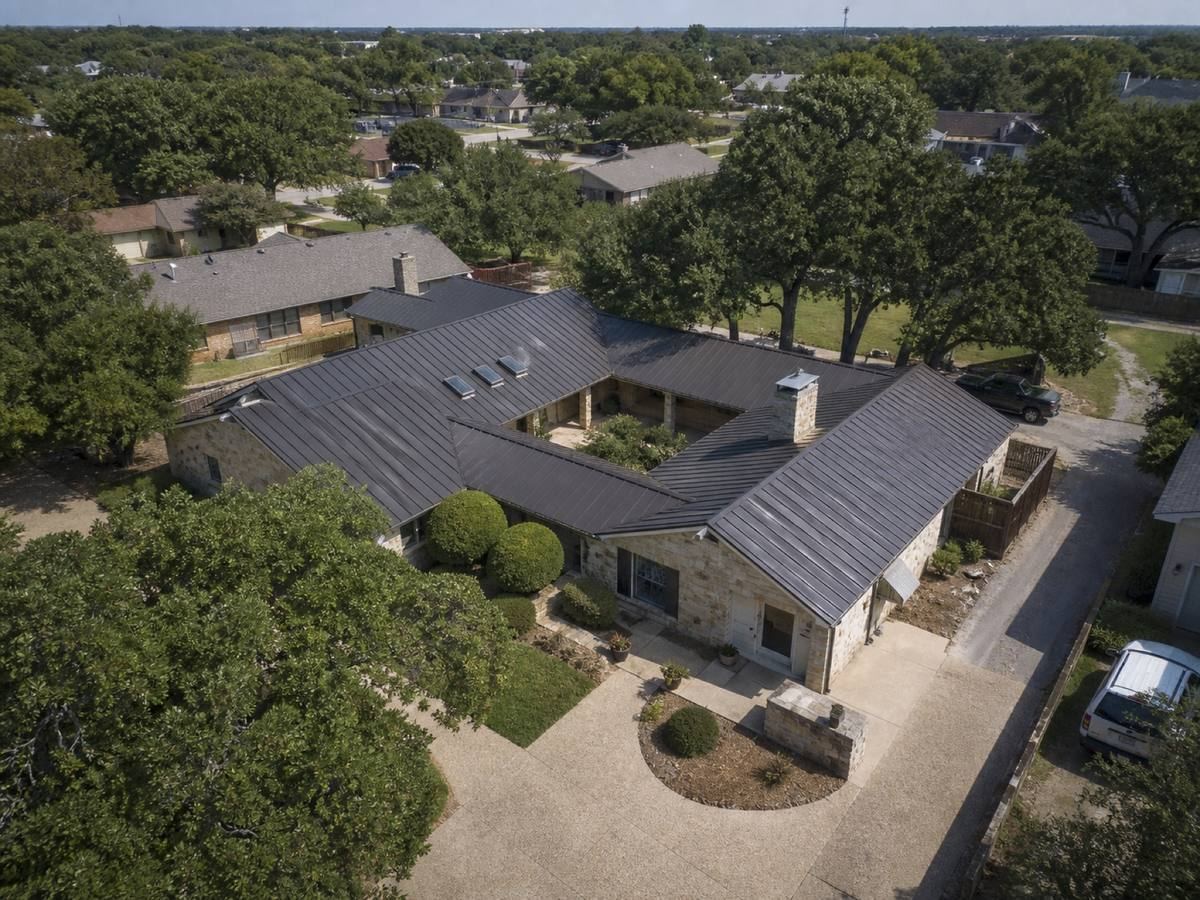
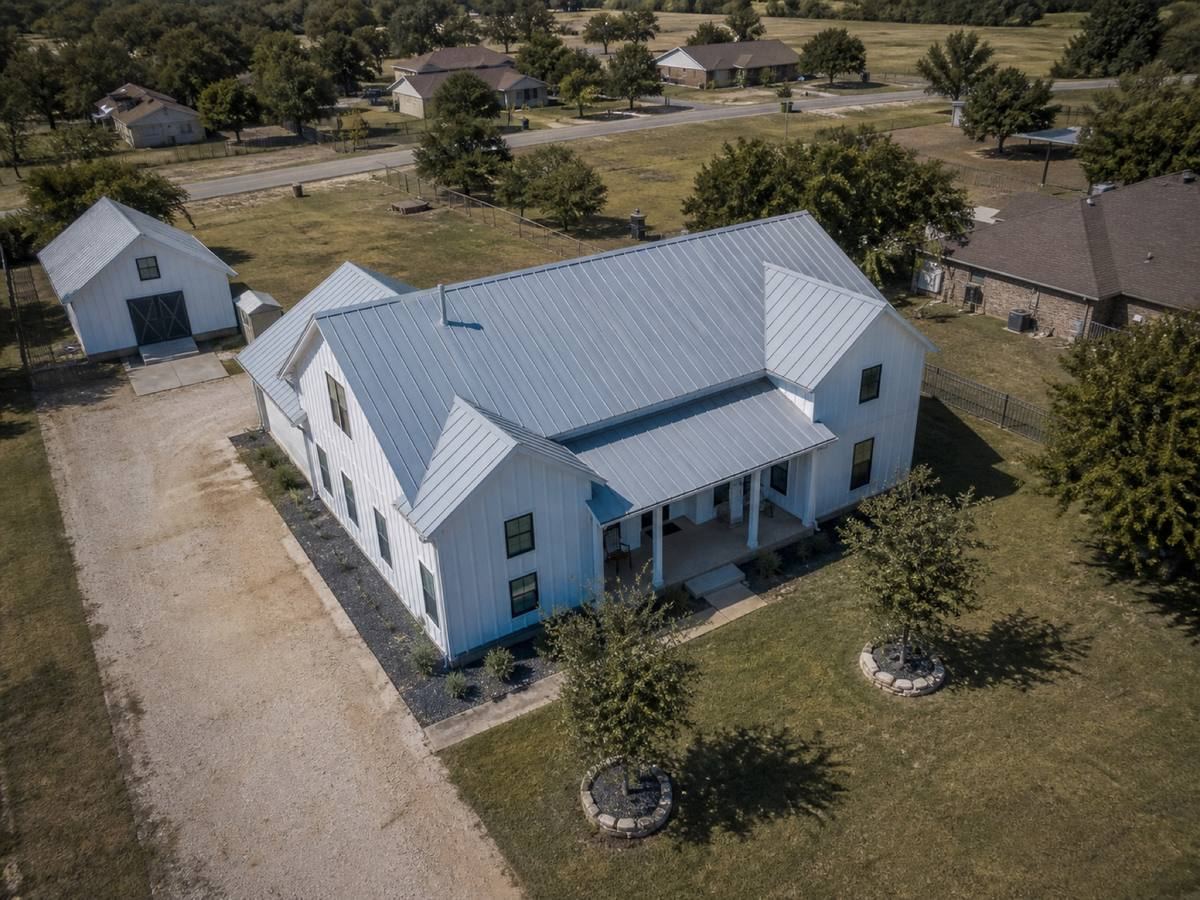
These are properties with long, uninterrupted runs — simple gable and shed planes, few penetrations, and an owner treating the roof as a lasting part of the building rather than a covering on a replacement cycle. The geometry suits the material, which rewards planes it can run from eave to ridge in a single length.
Where it is oversold
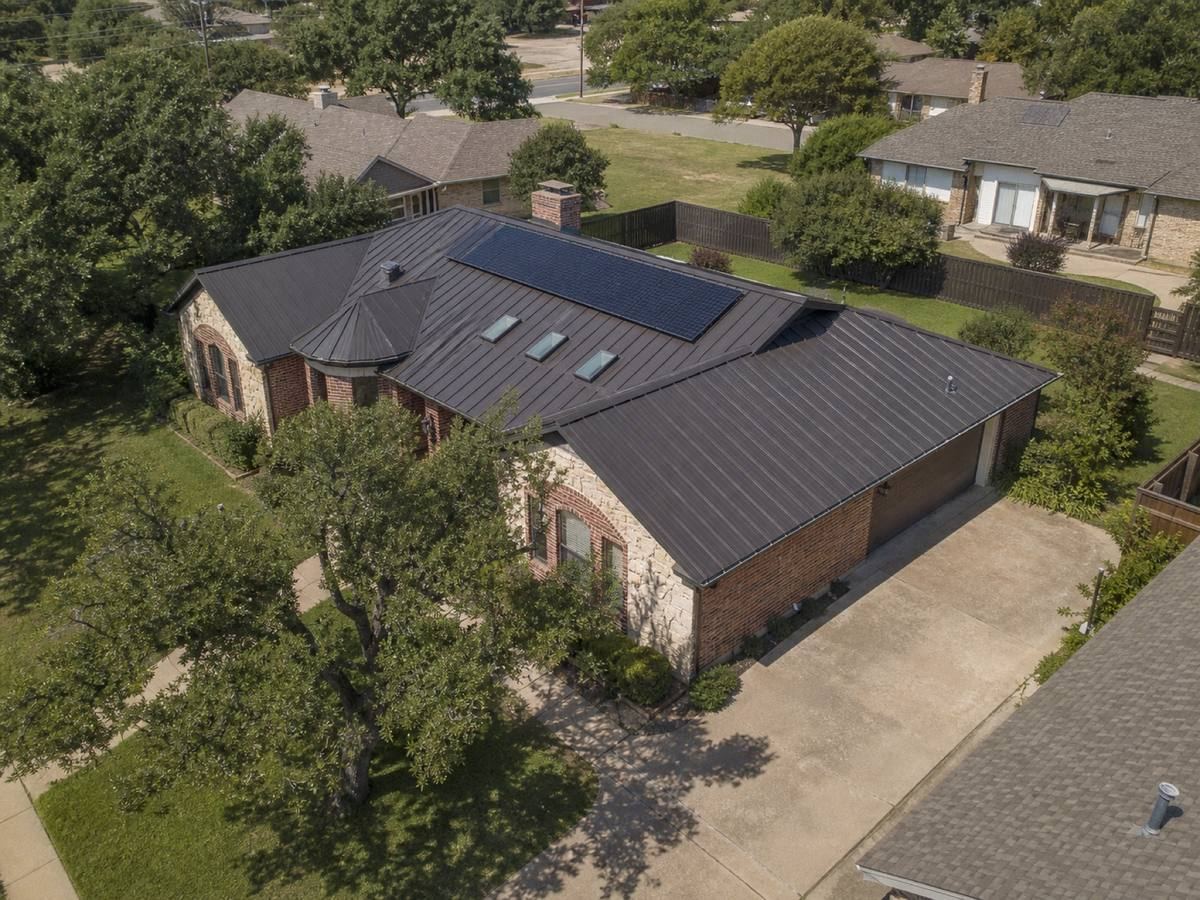
Standing seam is a poor answer on a cut-up roof. Dormers, valleys and clustered penetrations replace those long runs with hand-formed detail work, and each detail is a decision made on the day. It is also unforgiving of a badly measured start, because a panel roof cannot be quietly adjusted once it is up.
What an assessment looks at on this system
01
The clips, and whether they let the panel move. Metal grows and shrinks through every Texas summer day, and a panel held so it cannot travel will distort or tear at the fixing.
02
The set-out at the eave. Panel widths are established at the bottom of the run and cannot be corrected at the ridge, so a seam that starts out of square finishes out of square.
03
Every penetration and every termination. Pipes, curbs, ridge closures and end laps are where a standing-seam roof lets water in, because the flat field between them is doing almost nothing difficult.


 (214) 807-0414Request an assessment