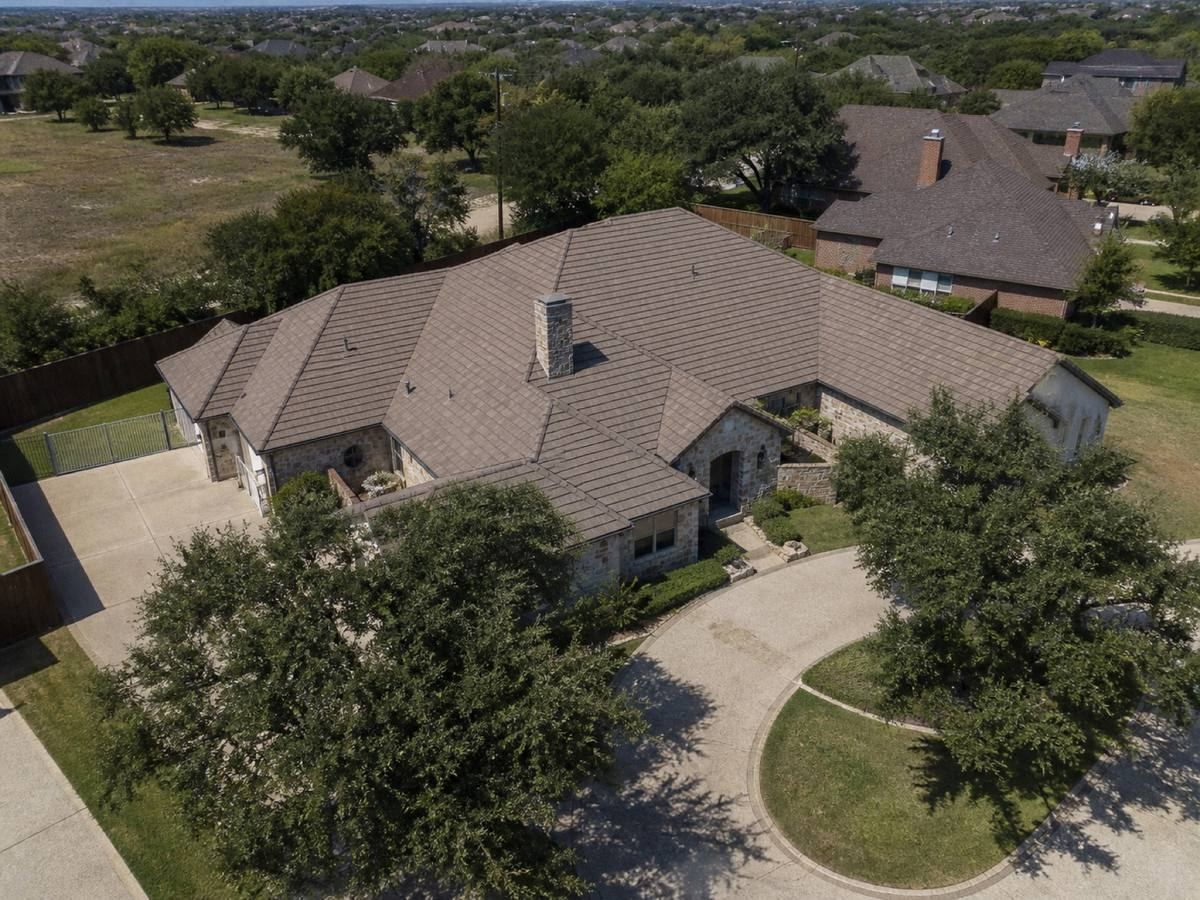
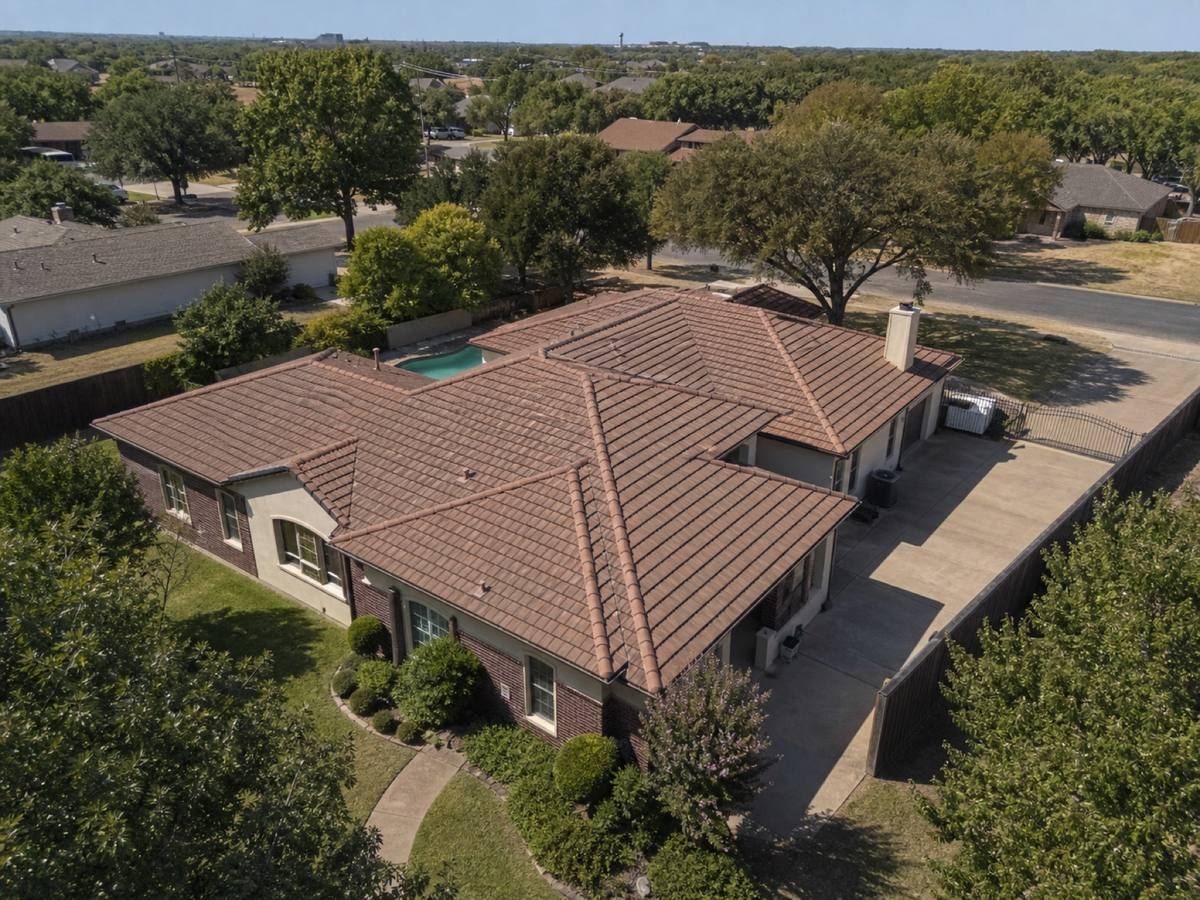
What concrete tile is, and where it is the wrong answer.
Concrete tile is a cast, cured masonry unit laid in courses over battens or fixed to the deck. It sheds the bulk of the water and shields everything below it from sun and impact. It is heavy, and that weight is a structural question about the building rather than a question about the covering, which is why an engineer answers it before a system is specified.
Why these properties
These are properties designed around the tile — Mediterranean and Spanish-influenced elevations where the roof carries most of the architectural weight of the house. Changing the covering for something flatter changes the building, which is why tile roofs are more often lifted, repaired and relaid than converted to something else.
Where it is oversold
Tile is oversold as a lifetime roof. The unit may well outlast everything around it, and that is the trap: the roof reads as intact from the ground long after the underlayment beneath it has finished. It also punishes access, so every trip across it by another trade costs something.
What an assessment looks at on this system
01
The underlayment and its age. The tile is the rain shield; the layer beneath it is the waterproofing, and it reaches the end of its life while the tile above it still looks almost new.
02
Broken and slipped units, and what broke them. Tile cracks under foot traffic as readily as under hail, so the pattern of breakage often maps to where somebody walked rather than where the weather hit.
03
Load, answered by a structural engineer. Where tile is being added to a roof that was not built for it, that assessment is engaged first and the specification follows it, never the other way round.


 (214) 807-0414Request an assessment